How to Choose the Right Custom Packaging for Your Product
A practical order for choosing packaging: start with the product, then the construction, then board, print and finish. What each decision actually depends on, and what helps us quote it.
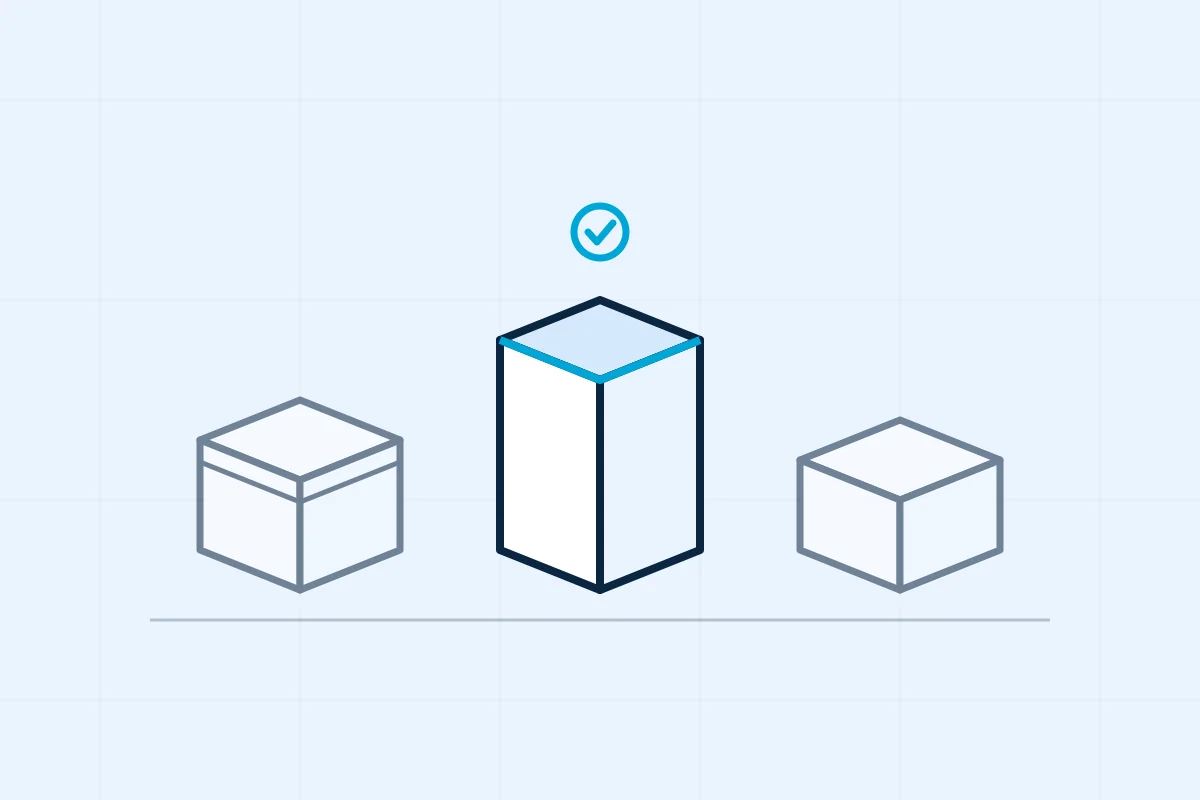
Most packaging decisions get made backwards. A box is chosen first — usually because something similar was seen on a shelf — and the product is then made to fit it. That order is what produces packaging that rattles, crushes in transit, or costs more than it needed to.
Working the other way round is slower for about an hour and cheaper for the rest of the project. This guide sets out the order we work through with customers, and what each decision actually depends on.
Start with the product, not the box
Before construction, material or print, four things about the product decide most of what follows:
- Dimensions. Length, width and height of the product itself, measured at its widest points — not the size of the box you imagine around it.
- Weight. A 90g cosmetic bottle and a 900g candle in the same footprint need different board.
- Fragility. Glass, ceramic and anything with a pump or hinge needs to be held still, not merely enclosed.
- How it travels. Handed over in a store, couriered across the UAE, or shipped in bulk and unpacked at the other end — these are three different problems.
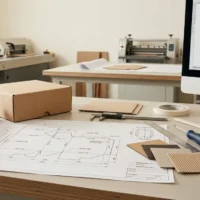
If a product has an unusual shape, the useful thing to send is the product itself, or a photograph beside a ruler. A drawing of what you think the box should look like tells us less than the object it has to hold.
Allow for what goes in with it
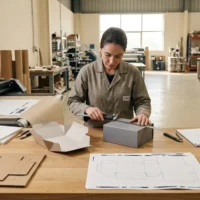
Tissue, a card, a sleeve, a sachet, a foam or card insert — these change internal dimensions and are routinely forgotten until the first sample. Decide early whether they are part of the pack.
Choosing a construction
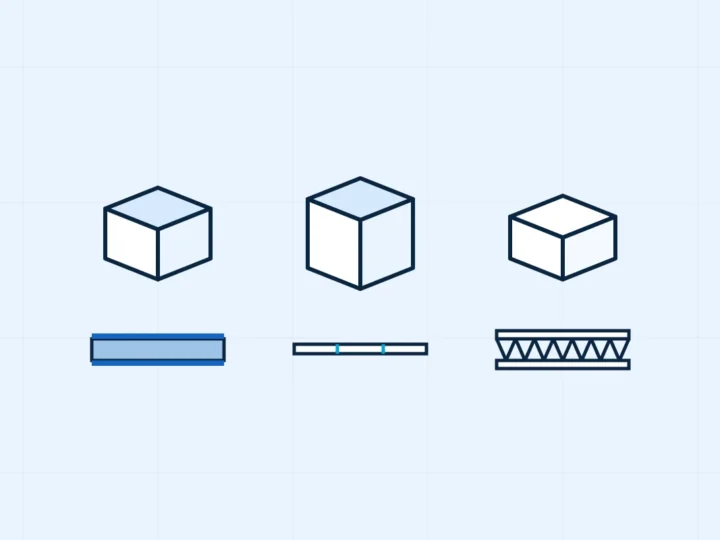
Six broad families cover almost every brief we quote. The right one is usually obvious once the product is on the table.
Rigid boxes
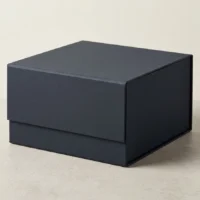
Rigid boxes are built from thick greyboard wrapped in printed paper. They do not fold flat, which makes them bulkier to store and ship, and they are the most substantial option to produce. In return they feel considerably more expensive than they look, hold their shape indefinitely, and take foil and embossing beautifully. Typical work: perfume, jewellery, watches, premium gifting, and anything where the unboxing is part of what is being sold.
Folding cartons
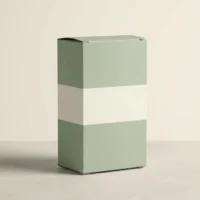
Folding cartons are printed paperboard, die cut, creased and glued, delivered flat and erected when needed. They are the default for retail: light, efficient to store, and printable across the whole surface. Cosmetics, pharmacy, food lines, electronics accessories — most boxes on most shelves are folding cartons.
Corrugated boxes
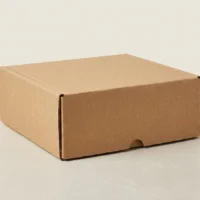
Corrugated boxes have a fluted layer between liners, which is what makes them stiff and shock absorbing for their weight. This is transit packaging: e-commerce despatch, shipping cartons, and display boxes that have to survive a journey before anyone sees them.
Paper bags
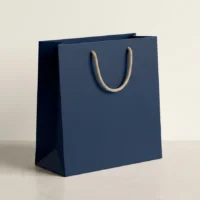
Paper bags are the pack the customer carries out and then, often, keeps. Handle type and base construction matter as much as the print — a bag that fails at the handle under a heavy purchase undoes the impression the print was there to make.
Food packaging
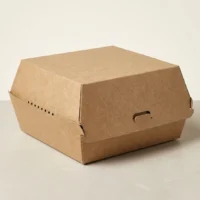
Food packaging brings constraints the others do not: grease, moisture, heat, and direct contact with what someone is about to eat. Tell us what the food is, whether it is hot or cold when packed, and how long it sits before it is eaten. Those three answers drive board and coating choices.
Labels and stickers
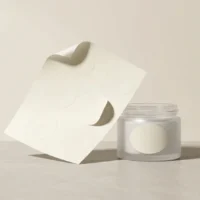
Labels and stickers finish the other five, and sometimes replace them. A plain carton with a well-made label is a legitimate strategy, particularly for a range where only the variant changes.
Material and board
Board is chosen for the load and the look, in that order. A carton that holds 200g does not need the caliper of one holding two kilos, and over-specifying board is one of the easier ways to spend money without the customer noticing anything.
Surface matters as much as thickness. Coated boards hold fine detail and photographic images; uncoated and kraft surfaces absorb more ink and read as more natural, which suits some brands and defeats others. If a specific look is the goal, ask to see the board before the run — this is exactly what prototyping and sampling is for.
Printing
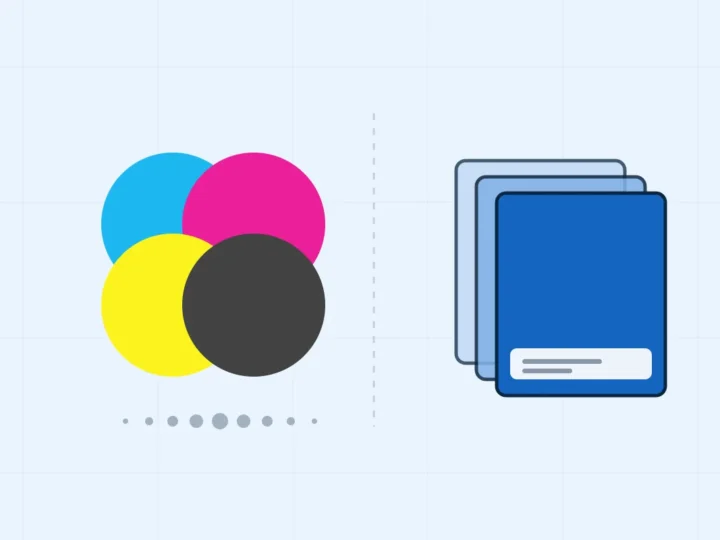
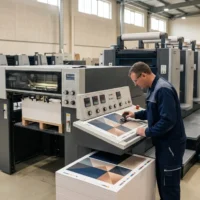
Printing is a choice between process colour, spot colour, or both together. CMYK builds colours from four inks and handles photographic artwork; Pantone spot colours are mixed to a standard and used where a brand colour has to land in the same place every run. Many jobs use both — process for the imagery, one spot ink for the logo.
This decision interacts with the board underneath it, which is why it is worth reading in more detail: CMYK vs Pantone covers when each makes sense. The packaging printing service page sets out what we run in house.
Finishing
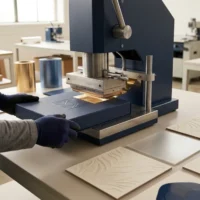
Finishing is where a box stops looking printed and starts looking made. The operations carried out at our Ajman facility include matte, gloss and soft-touch lamination, foil stamping, embossing, debossing and spot UV, along with die cutting, grooving, gluing and assembly.
Two things are worth knowing before choosing. First, finishes are cumulative in cost and in effect — soft-touch lamination with a small foil detail usually reads as more considered than four techniques competing on one surface. Second, some finishes constrain others; heavy lamination changes how foil sits, for instance. Our finishing page lists what is available, and we will say plainly when a combination will not do what you are hoping.
Quantity
Quantity affects unit cost more than any other single decision, because tooling — the cutting die, any foil block — is made once and then used for the whole run. Splitting an order into small repeat runs pays for the setup repeatedly.
Against that, packaging that sits in storage for two years is capital doing nothing, and artwork that is still settling will be obsolete before it is used. The honest answer is that the right quantity is a commercial judgement about your own sell-through, not a number we can supply. Tell us the range you are considering and we will quote it so you can see where the curve flattens.
What helps us quote
A quotation needs four things:
- The construction, or a description of the product if you are unsure which construction suits it.
- The dimensions of the product being packed.
- The quantity, or an approximate range.
- The print and finish you have in mind.
If you have fewer than four, send what you have. A photograph of a competitor’s box, a rough sketch, or the product itself is usually enough for us to recommend a construction and quote against it.
A short checklist
- Have you measured the product, not the box?
- Have you included inserts, tissue or cards in the internal dimensions?
- Do you know how the pack travels before it reaches the customer?
- Is the board specified for the weight it carries, rather than by habit?
- Does a brand colour need to match exactly, or is close enough acceptable?
- Have you seen a physical sample on the actual board before committing to the run?
- Is the quantity based on realistic sell-through rather than the best unit price?
Working through that list before asking for prices tends to produce a better result than working through it afterwards.
If you would rather work through it with someone, the full packaging range shows what each family covers, or send us a specification and we will come back with a construction and a price.