



Rigid Boxes vs Folding Cartons vs Corrugated Boxes: What’s the Difference?
Three constructions doing three different jobs. How each one is built, what it protects against, how it stores, and how to tell which one a product actually needs.
Rigid box, folding carton, corrugated box. The three terms get used loosely, and the wrong choice is expensive in a way that only becomes obvious after the run: packaging that costs more than the job needed, or that arrives crushed.
They are genuinely different objects, built differently, for different work. This guide sets out how each is made, what it is good at, and how to tell which one a product needs.
The short version
| Rigid box | Folding carton | Corrugated box | |
|---|---|---|---|
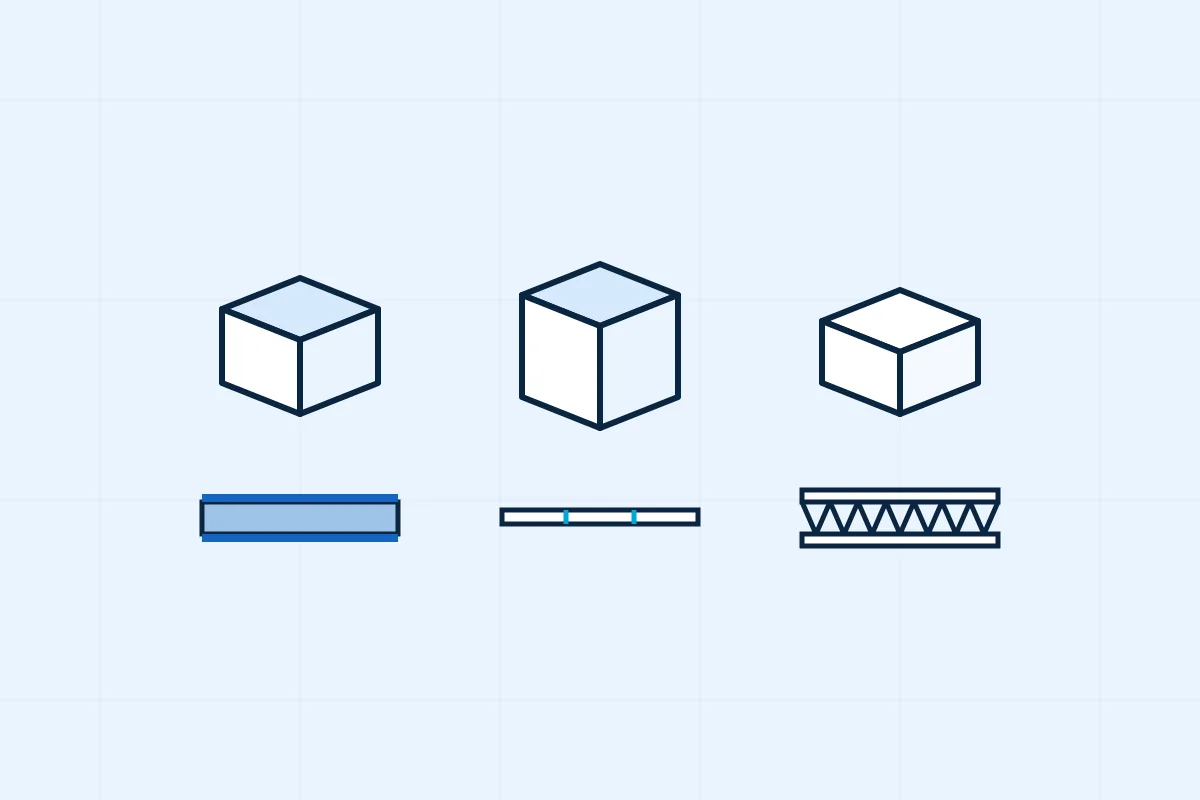
| Construction | Thick greyboard, wrapped in printed paper | Single-layer paperboard, die cut and creased | Fluted layer between liners |
| Ships flat | No — arrives assembled | Yes | Yes |
| Storage | Bulky | Very compact | Compact |
| Perceived value | Highest | Retail standard | Functional |
| Protection in transit | Good, but heavy | Limited | Highest for the weight |
| Print surface | Wrap, printed separately | Direct, full surface | Direct or printed liner |
| Finishing range | Widest | Wide | More limited |
| Relative cost | Highest per unit | Middle | Lowest for the protection |
| Typical use | Perfume, jewellery, gifting | Retail shelf lines | E-commerce, shipping |
The rest of this article explains the reasoning behind those rows.
Rigid boxes
How they are made
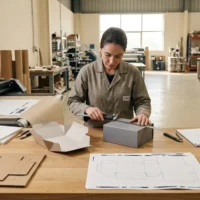
A rigid box starts as thick greyboard, cut and formed into a shell that does not fold. That shell is then wrapped in a separately printed paper. Two materials, two processes, more hand work than the other two constructions — which is where both the cost and the quality come from.
Because the printed wrap is a separate sheet, it can carry finishes that would be awkward on a formed box: foil stamping, embossing, debossing, soft-touch lamination.
What they are good at
Perceived value, and holding shape. A rigid box feels substantial when picked up, opens with resistance rather than flopping, and survives being kept. For products where the unboxing is part of what is being sold, nothing else reads the same way.
What to weigh against it
They do not fold flat. An assembled rigid box occupies its full volume in storage and in transit, which affects warehouse space and shipping. They are the most expensive of the three per unit, and best suited to considered quantities rather than high-volume disposable packs.
Typical applications
Perfume and fragrance, jewellery and watches, premium cosmetics, corporate and seasonal gifting, and any launch where the box is photographed as often as the product. Our rigid box range includes magnetic closure, lid and base, and drawer constructions.
Folding cartons
How they are made
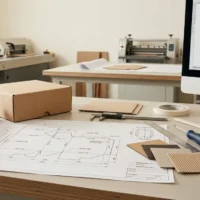
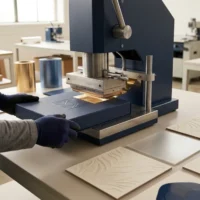
A folding carton is one layer of paperboard, printed flat, then die cut to shape and creased where it needs to fold. It is delivered flat and erected at packing. Most are glued along one seam; others lock together without glue.
Everything happens on one sheet, so the whole outer surface is available to print in a single pass — which is what makes it the efficient choice for detailed retail artwork.
What they are good at
Efficiency, without giving up presentation. Flat delivery means low storage cost and low shipping volume. Print quality on coated board is excellent, and the finishing range is wide: lamination, foil, embossing and spot UV all work. For most products that sit on a shelf, this is the correct answer.
What to weigh against it
A single layer of board offers limited protection. A carton keeps a product clean, contained and presentable, but it will not absorb a drop. Anything fragile or travelling alone usually needs a carton for presentation and a corrugated box around it for transit.
Typical applications
Cosmetics and skincare, pharmacy and supplements, packaged food, electronics accessories, and almost any multi-variant retail range. Our folding carton range covers straight tuck end, reverse tuck end and auto lock bottom styles.
Corrugated boxes
How they are made
Corrugated board is a fluted sheet sandwiched between flat liners. The flutes are arches, and arches resist compression — which is why corrugated is stiff and shock absorbing at a low weight. Flute sizes vary: finer flutes give a smoother printing surface, coarser ones give more cushioning.
What they are good at
Protection per gram. Nothing else in this comparison protects as well for its weight, which matters directly when shipping is charged by weight and volume. Corrugated also stacks predictably, so it behaves well in a warehouse and on a pallet.
What to weigh against it
The surface is less refined. Printing on corrugated is improving but does not reach the crispness of coated paperboard, and the fluting can show through as fine ridges on large flat areas. It reads as functional — which is exactly right for despatch and wrong for a gift.
Typical applications
E-commerce mailers, shipping cartons, outer cases for retail-packed goods, and display boxes that ship and then sit out. Our corrugated range covers mailers, shipping boxes and e-commerce constructions.
How to choose
Three questions usually settle it.
1. Who sees the box, and when?
If the customer opens it as part of buying the product, presentation is doing commercial work — rigid or a well-finished carton. If it is opened by a warehouse and discarded, it is transit packaging.
2. What happens between here and there?
Handed over in a store is a light duty. Couriered to a home address is not. If the pack travels alone, either corrugated or a carton inside a corrugated outer.
3. How much storage do you have?
Rigid boxes are bulky from the day they are delivered. If space is tight, that is a real constraint, not a detail.
Using more than one
Most established products use two constructions, not one. A folding carton on the shelf inside a corrugated shipper. A rigid box for the gift edition and a carton for the standard line. A corrugated mailer with a printed label instead of full print, so one plain box serves several products.
That last approach is worth considering when a range is still settling: it keeps the outer generic and puts the variable information somewhere cheap to change.
If you are still unsure
Send the product, its dimensions, or a photograph, and tell us how it reaches the customer. Recommending a construction from that is ordinary work rather than a favour, and it is the part of the conversation that saves the most money.
Materials, board weights and finishes are chosen per project at our Ajman facility — see the full packaging range, or send a specification and we will come back with a recommendation and a price.